Home | Programs | Diplomas | Fine Craft: Fibre Arts
Ali-Murphywebready

Fine Craft: Fibre Arts

This 2-year studio-based diploma program can be achieved in 4 semesters of study where you foster original ways of thinking about fine craft practice.

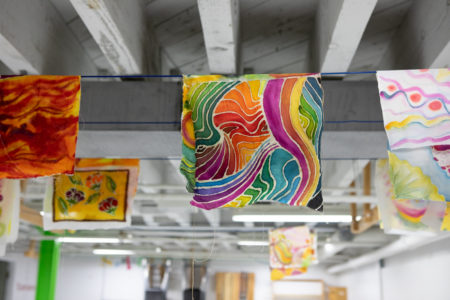
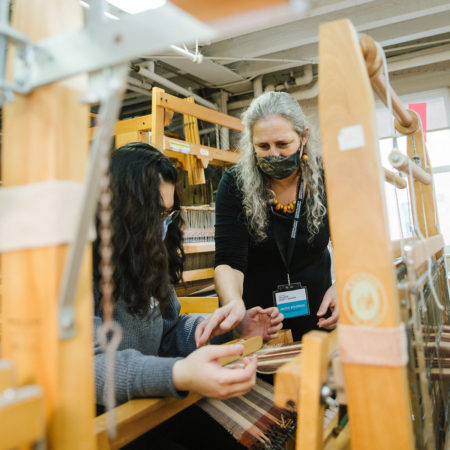
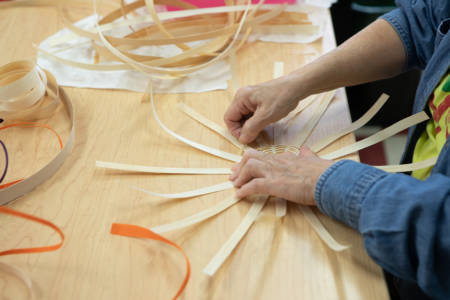
The Fine Craft: Fibre Arts Program is designed to provide a solid foundation in weaving. You explore tapestry, multi-shaft weave structures, computer-assisted design software for machine knitting and weaving software, and contemporary production techniques. Courses are also offered in felting, dye methods, spinning and bookmaking. You will explore a full range of expression from fashion accessories and home décor to a more artistic approach to process and material.

Through applied research, critical discourse and self-reflection you will engage in creative problem solving. You learn about communications for visual artists, art history, drawing, and 2D/3D design. Assignments create a portfolio that celebrates the power of your imagination.  

To be admitted to this program you are required to have:

• A portfolio and a postsecondary certificate or diploma in a related field or equivalent experience.

Click here for more information on how to apply.

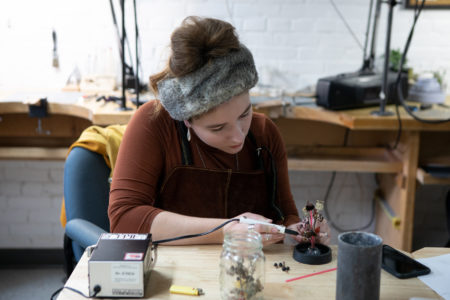
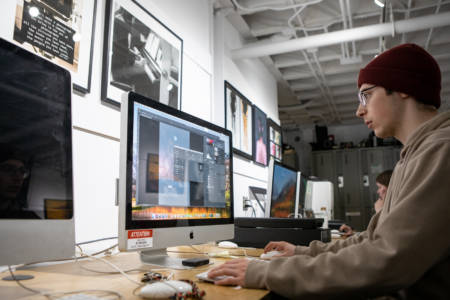
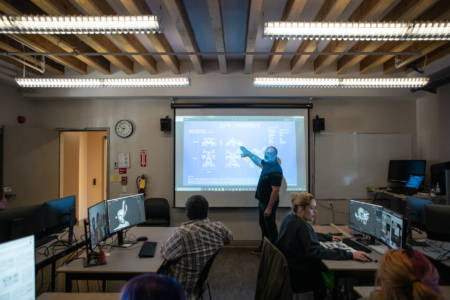
You will be working with celebrated instructors in fully-equipped studios, Apple computer labs and classrooms. Coming here, you will learn first-hand why Fredericton is a Cultural Capital of Canada. The galleries, boutiques, universities and many cafés make the College’s downtown location an inspiring and supportive learning environment and an ideal place to obtain an education in the visual arts.

Click here for more information on this program or to enjoy an on-site tour of our facility. 

Areas of Study
• Textiles
• Weaving
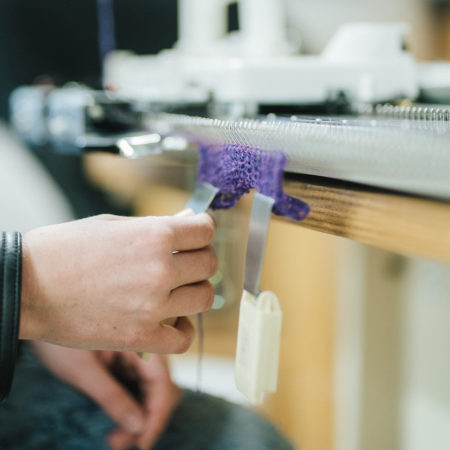
• Machine Knitting
• Designing for Production
• Dye Methods
• Off-loom Techniques
• Tapestry
• Felting
• Computer Assisted Design
• Textiles History

Career Possibilities
An entrepreneurial focus in all courses prepares your for a successful and rewarding career as an artist, teacher and designer within the textiles and fashion industries.

Targeted Jobs (including NOC codes)
• Painters, Sculptors and Other Visual Artists (5136)
• Interior Designers (5242)
• Theatre, Fashion, Exhibit and Other Creative Designers (5243)
• Artisans and Craftspersons (5244)
• Patternmakers – Textile, Leather and Fur Products (5245)
• Tailors, Dressmakers, Furriers and Milliners (7342)
• Weavers, Knitters and Other Fabric-Making Occupations (9442)
• Textile Inspectors, Graders and Samplers (9444)
• Sewing Machine Operators (9451)
• Fabric, Fur and Leather Cutters (9452)
• Labourers in Textile Processing (9616)
National Occupational Classification (NOC)

Articulation Agreements
Graduates receive two full years credit towards a Bachelor of Applied Arts (BAA) at the University of New Brunswick. Click here for more information.

Diploma - Fine Craft: Fibre Arts Program Course Descriptions


Semester 1

The Whole Cloth Experience: Resist Dye Methods, Weaving and Machine Knitting
In this course, students explore ancient resist dye and discharge techniques, experience the magic of transforming threads into cloth and are introduced to manual machine knitting. These major areas of textiles studies are achieved through the design, construction and embellishment of cloth. Students produce a number of samples and then apply their accumulated knowledge and techniques in the creation of a final textiles project in each area of focus.

Principles of Surface Design: Structure and Colour
In this course students gain proficiency in textile design layout structures, pattern development and textile colour theory. They acquire colour mixing, matching and painting skills to create seasonal colour palettes, textile designs, design concepts and presentation boards. Students create a personal resource library of historical and contemporary design styles and colour trends, and learn their uses in contemporary surface design practice.

Twisted Fibres: Creative Explorations in Spinning
In this course, students create handspun designer yarns from a variety of fibres. Through a series of exercises, they learn how to prepare raw fibre and use traditional methods of the spinning wheel to achieve a variety of yarn types. Students create yarns both conceptual and functional end uses.

Au Naturel: Dyeing with Roots, Flowers, Bark and Insects
In this course, students learn the processes and techniques to colour yarns and cloth with natural dye materials. Using substances such as flowers, insects, roots and wood, they create hues that demonstrate sensitivity to value and chroma with knowledge of chemicals used to shift colour safely. In addition, they compile and share their samples and research with classmates creating an extensive resource binder for future studio practice.

Communication for Visual Artists
In this course, students tap into the world of social media, in the form of blogging, to initiate their professional communications. They create an online archive of professional documents including digital images of their work, biographical information and artist statements. Learning activities are designed to enhance student’s confidence providing skills to critically, concisely, and competently evaluate their artistic work and the work of their peers. Students write responses to pertinent topics and in so doing learn to communicate their ideas about visual art. In addition, they become acquainted with the steps to apply for a relevant scholarship.

In semester one, students choose one of the following electives:

Directions in Drawing: Traditional and Contemporary
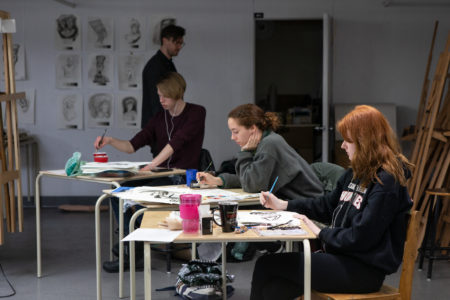
In this course, students expand their observational abilities and drawing skills. Initially, they engage with traditional principles of spatial and compositional organization, and then explore a variety of material-based approaches to expressive drawing. In addition, students explore new directions and interpretations by examining work of significant contemporary artists through guided self-directed projects that align with their personal sensibilities.

Life Drawing: Structure and Form
In this course, students enhance their capacity to see, interpret and draw the complex three-dimensional form of the body. They develop their ability to draw the life model with attention to proportions, shape and general anatomy. Students increase facility with essential strategies such as gesture, massing, mapping and sighting as applied to figure drawing. In addition, they address expressive and intentional strategies in depicting the human form.

Watercolour: Exploring Water-based Materials
In this course, students make paintings, largely from observation, using the traditional techniques of watercolour, gouache and inks. They become familiar with the properties of various materials, tools and methods of handling them. In addition, they engage in painting exercises that address issues of colour and formal relationships of visual art with an emphasis on stylistic concerns. Students also experiment with mixed media collage and various other directions.

Approaches to Drawing: Style, Materials and Techniques
In this course, students produce drawings, as a means to communicate relevant concepts, through the application and exploration of various styles, materials and techniques. Basic visual principles are re-examined as abstract concepts capable of conveying information. Assignments focus on composition, expression and the development of personal imagery and reference material for the purpose of communicating ideas.

Semester 2

The Whole Cloth Experience: Felt, Silkscreen Printing and Sewing
In this course, students construct a binder of sewing techniques, create fabric designs with silkscreen printing and learn to manipulate fibres into felted products. Employing a wide range of materials they embellish cloth and explore the functional and conceptual possibilities of 2D and 3D projects. Students explore imagery using silkscreen print processes in conjunction with a variety of media. In addition, students use basic sewing techniques for the production of their finished projects.

Surface Pattern and Product Design
In this course students become proficient in creating surface pattern layout structures and incorporating contemporary mixed media imagery with traditional pattern. Through a series of projects, they produce seasonal palettes and colourways for interiors, apparel, and other products as well as amass a design collection for specific end uses. Students learn various aspects of freelance design and gain practical ‘real like’ experiences thought competitions and commissions.

Designing for Weave and Knit
TBA

Evolution of Textiles
In this course, students explore a variety historical textiles traditions and practices from around the world. Geography, available materials, local technologies, belief systems and cultural norms are all examined in the context of constructing and embellishing cloth. Selected readings, class discussions and a studio research component support the study and understanding of material culture and the multi-layered meanings of cloth.

3D Design: Shaping Space
In this course, students combine a wide range of materials to produce projects that explore both spatial relationships and the broader world of “design.” By engaging in lectures and discussions that examine the theories of historic and contemporary 3D design, they develop a design aesthetic which is accompanied by research and documentation. Combining various aspects of “the making of objects,” students are encouraged to use mixed media, and materials from their own disciplines, emphasizing peer presentations and critical visual analysis.

Semester 3

Pattern Drafting and Sewing for Textiles
In this course students explore the basic concepts of pattern development to construct fashion accessories and a wearable art. They learn through practical applications the relationship between flat patterns and three-dimensional form by drafting patterns and sewing mock-ups in muslin. Students design and sew several fashion accessories and wearable art pieces incorporating their original and recycled fabrics.

Computer Assisted Design for Weaving
In this course, students learn CAD software to draft weaving designs that are then woven into a variety of fabric types in FIBR 3903 More than Four: Multi-shaft Weaving. Initially weaving samples, they learn to apply computer technology, as a design tool, on computer looms driven by specialty software and in the hand production of textiles on manual looms. In addition, their research, designs and woven samples are compiled into a resource binder for reference in their future studio practice.

3D Construction
In this course, students create concept boards to illustrate their design process for market-ready products and learn methods for making passementerie (fringes, tassels, etc.). With a focus on constructing 3D textile objects for a variety of end uses, they explore finishing and embellishment techniques to enhance these objects.

Myth, Magic and the Human Form
In this course, students learn about textiles from various cultures and create objects that reflect an understanding of their history, myths and symbolism. Students investigate the overlap between body and spirit, in cultural creative processes, particularly as in relationship to textiles. Emphasis is placed on body identity and adornment in the context of the supernatural.

Preparing for the Retail Market - Fine Craft
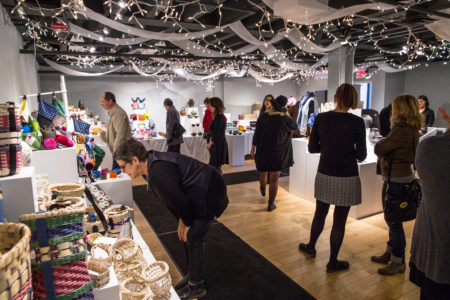
In this course, students focus on preparing for the retail market place through designing, organizing, and executing a Christmas student craft show. They learn essential concepts and principles of business including studio set-up, pricing, profit, and overhead costs. Students photographically document their work throughout the course and produce introductory marketing materials. This real life activity provides students with the basic elements of entrepreneurship as they relate to the retail market.

Semester 4

Felting with Secondary Fibres and Structures
In this course, students explore functional and conceptual possibilities of felt through a series of projects leading to the creation of a wearable art piece that is exhibited and critiqued by a theatrical professional. Using an experimental approach, students make samples employing a wide range of materials and traditional/non-traditional techniques of surface embellishment. In addition, these processes are used in conjunction with advanced textile constructions.

Computer Assisted Design for Eight-Plus Harness
In this course, students create computer generated design structures on a CAD program and using design software, weave a series of complex cloth samples. They expand their knowledge of drafting 8-16 harness weave structures on the computer and apply that knowledge directly by weaving on computer driven and manual looms. Students compile their research, designs and woven samples into a resource binder. The designs created in the course are utilized in FIBR 3906 Complex Cloth: Eight Harnesses Plus.

Complex Cloth: Eight Harnesses Plus
In this course, students deepen their understanding of complex weaving structures, 8-16 harness, to produce fine textiles which may include: supplementary weft, lace, satin damask, double weave and/or differential shrinkage. The selection of appropriate fibre, colour and textural elements are explored in greater depth, as well as applications, forms and functions of complex cloth. Design software is employed by students as they produce fabric which is designed in FIBR 3905 Computer Assisted Design for Eight-Plus Harness Weaving Structures.

Preparing for Wholesale Market - Fine Craft
In this course, students learn the entrepreneurial skills needed to market their work to a wholesale market by participating in the Atlantic Canada Trade Show (ACTS) in Halifax. Students enhance their business communication skills in professional presentation, portfolio documentation as well as producing invoices, estimate sheets and letterhead. In addition, they develop entrepreneurial ideas and are introduced to business planning and grant writing.

In semester four, students choose one of the following electives:

Painting in Acrylics
In this course, students learn the fundamental principles of painting through creating images in the medium of acrylic paint. Assignments explore both the historical and contemporary approaches of the painting process. Students have the opportunity to develop an independent body of work which is informed by experimentation and critique, and in addition, is related to a personal area of interest.
Imagery, Sources and Development
In this course, students develop imagery by exploring and refining drawing and painting methods using various mixed media and surface treatments. In so doing, they discover the associative potential between materials and imagery that contributes the constructing of meaning. Students experience traditional and non-traditional approaches to drawing through assignments, visual presentations and gallery visits. A final project encourages students to pursue personally relevant imagery and an individual stylistic approach.

Creative Design Exploration
In this course, students focus on their creative skills and innovation abilities to produce original designs that are realized into 2D/3D product prototypes. Using multiple models of problem solving strategies, students explore form, function and a variety of materials, to apply new skill sets to their methodologies. Students overcome visual and conceptual challenges by working in interdisciplinary teams interacting live, via Skype, with the design team at Umbra to produce a submission to the Umbra Design Collaborations Program.
Paper and Book Arts
In this course, students tap the creative potential of the hand bound book through an exploration of book structures, construction and deconstruction methods. Projects introduce different binding techniques as students use unique tools, materials and processes. In addition, students are encouraged to explore the aesthetic qualities of the book through 2D and 3D embellishment techniques including printed material, transfer techniques and hand stitched embellishments.

Designing Bodies: Exploring Traditional and Contemporary Body Expressions through Art
In this course, students create artwork using influences from the traditional and contemporary practices of body adornment/modification. With an aesthetic and anthropological perspective, they research specific Aboriginal practices in body art, such as tattooing, piercing, mehndi (henna), branding and scarification. Students gain a new perspective on this ancient activity, incorporating the ideologies into individual projects as well as communicating their ideas in a clear professional manner.

FibreArtsGorhamLRwebready